Web Designer
Delivered a responsive site in 10 days with a component library, device breakpoints, and motion-driven interactions.Harpin AI Website Redesign
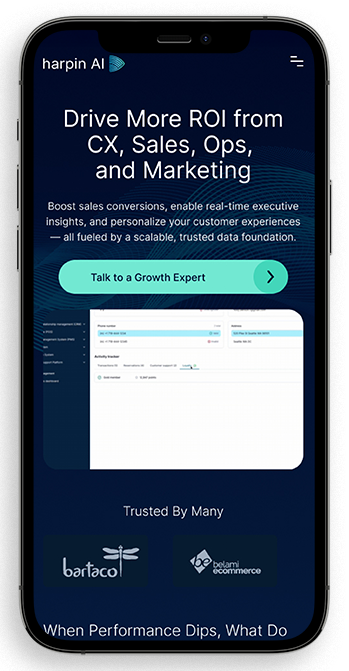
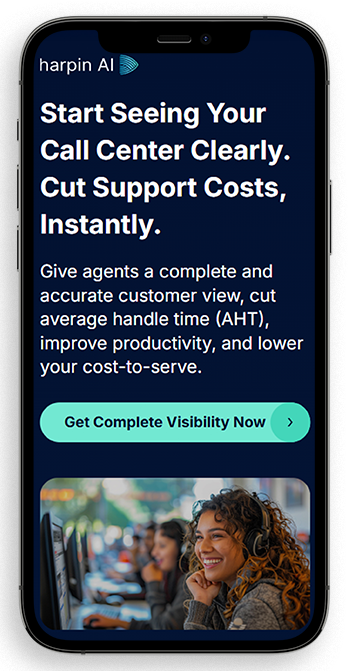
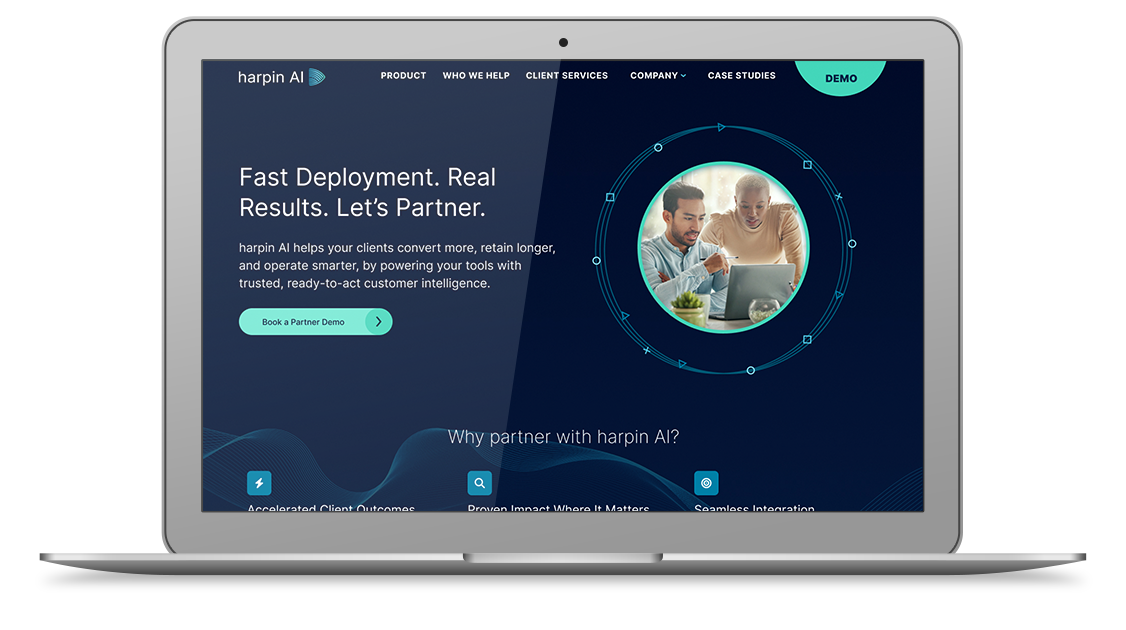
Redesigned the Harpin AI website in a focused 2-week sprint, delivering 15 fully responsive pages that highlight the platform’s real-time call center visibility, cost-saving insights, and operational intelligence. The updated design clarified complex AI-driven messaging, emphasized trust through modern visuals and motion-led interactions, and created a clear narrative around Harpin’s decision intelligence platform for enterprise leaders. The result was a faster, more cohesive user experience that strengthened Harpin’s credibility and engagement with executive-level prospects.
- User: B2B Enterprise
- August, 2025
- Team: Lead UI/UX Designer (me)
- Tools
- Research: Competitors
- Ideation: Wireframes, Rapid Prototypes
- Visual Design: Figma, FigJam
- Development Handoff: HTML, CSS, JS, TypeScript
- Duration
- 2 weeks
Problem
1. How might we:
redesign Harpin AI’s website to clearly communicate its decision intelligence platform and differentiate it from other enterprise AI solutions?
2. How might we:
simplify complex messaging around data visibility, automation, and performance insights so executives and operations teams can understand value instantly?
3. How might we:
balance Harpin’s technical depth—AI models, data pipelines, and predictive analytics—with a clean, intuitive user experience across all devices?
4. How might we:
showcase Harpin’s unique strengths—real-time KPI alerts, operational visibility, and margin growth—in a credible, enterprise-ready design system?
5. How might we:
build brand authority in the competitive AI and analytics landscape through strategic storytelling, modern design, and consistent visual hierarchy?
Research
Competitive Research and Market Analysis
Since internal behavioral data was limited, I conducted a deep competitive analysis of direct and indirect players in the enterprise AI and decision intelligence space.
• Benchmarked 6 competitors’ websites for messaging clarity, data visualization, and credibility across executive audiences.
• Compared visual hierarchies, CTA placement, and performance across responsive breakpoints.
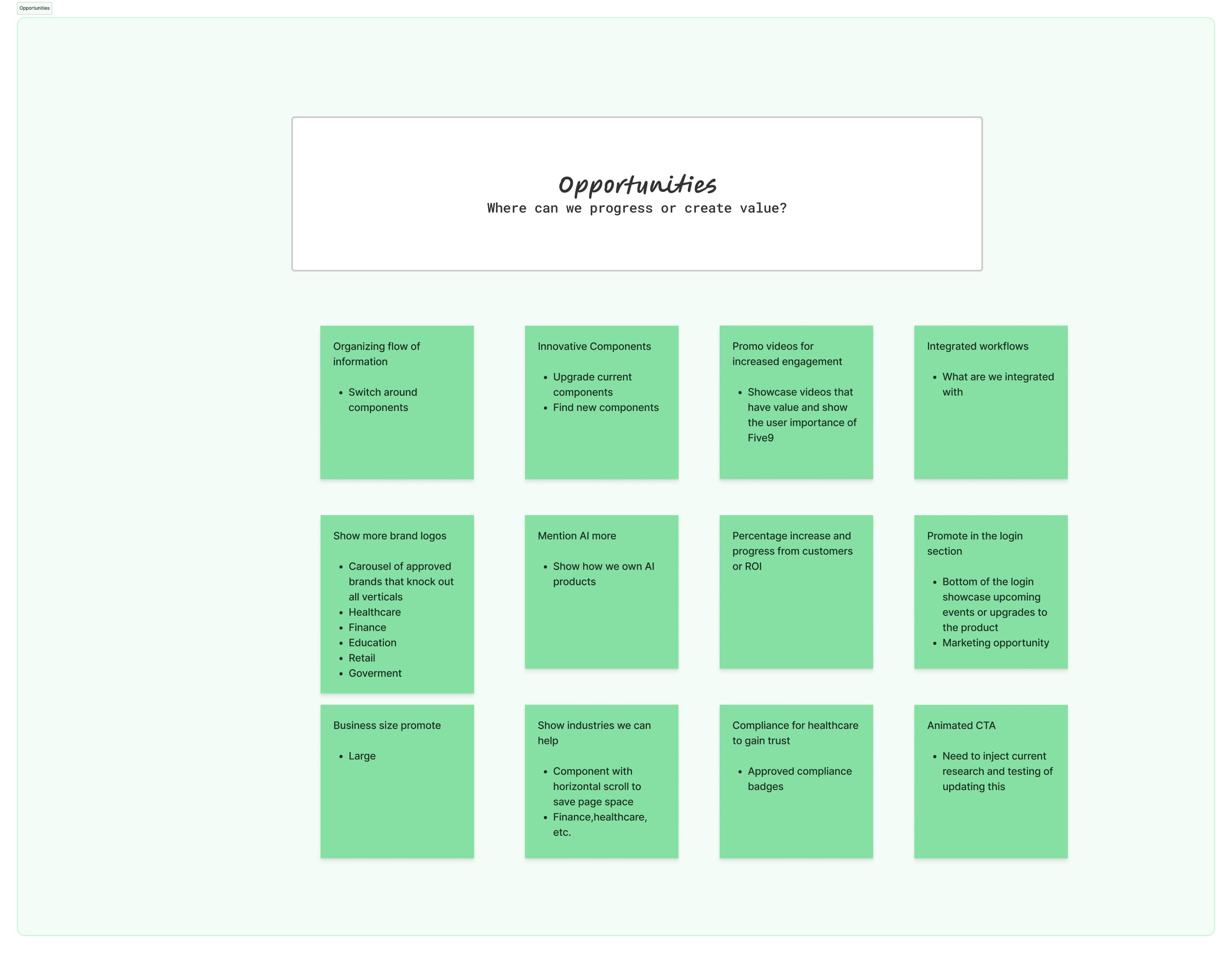
• Identified opportunities for Harpin to stand out—such as highlighting real-time KPI alerts, margin growth insights, and cross-department visibility.
• Synthesized findings into actionable design principles that guided the 2-week redesign sprint and informed the site’s content and interaction strategy.
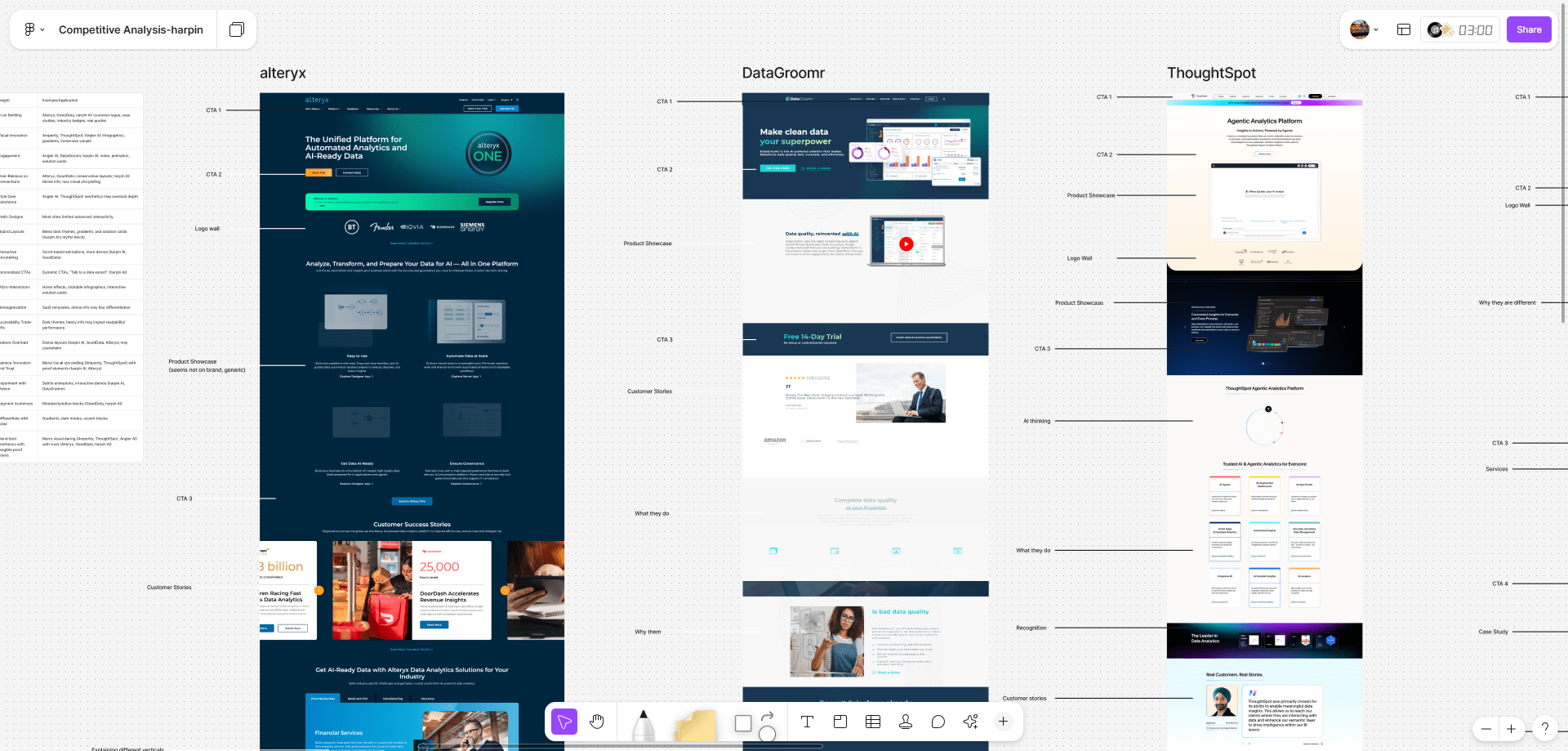
Helped Harpin AI Stand Out in a Crowded Market
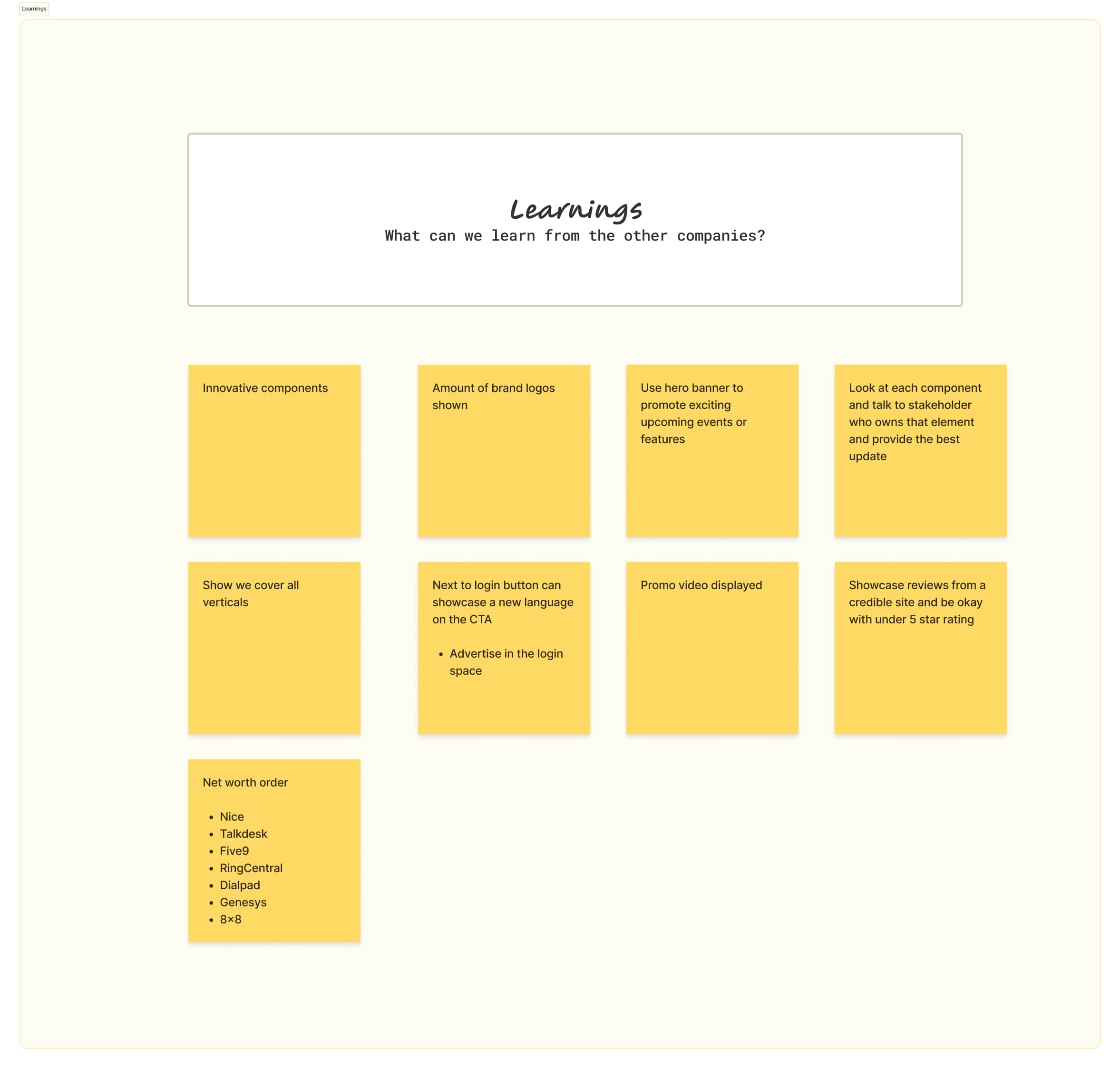
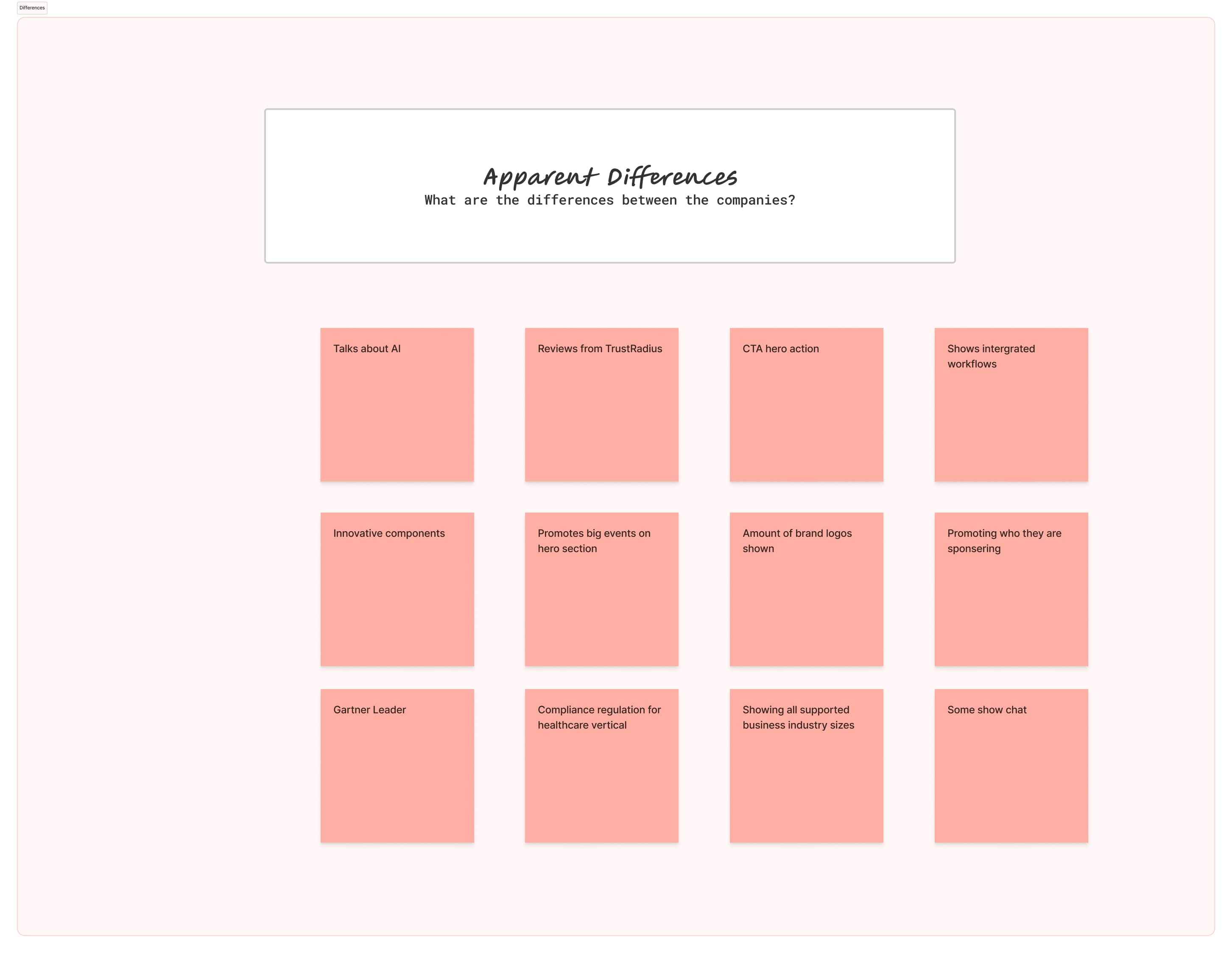
During the research phase, I conducted a competitive analysis of leading enterprise AI and decision intelligence platforms. I captured and reviewed competitor websites, running them through ChatGPT to identify common structures, layouts, and content patterns that enhance clarity and engagement. This process surfaced best practices in navigation, credibility indicators, and executive-focused messaging—while also revealing clear gaps where Harpin could differentiate. By applying these insights, I designed a streamlined, responsive layout that positioned Harpin AI’s real-time KPI visibility and decision intelligence as both credible and distinct in the enterprise AI market.
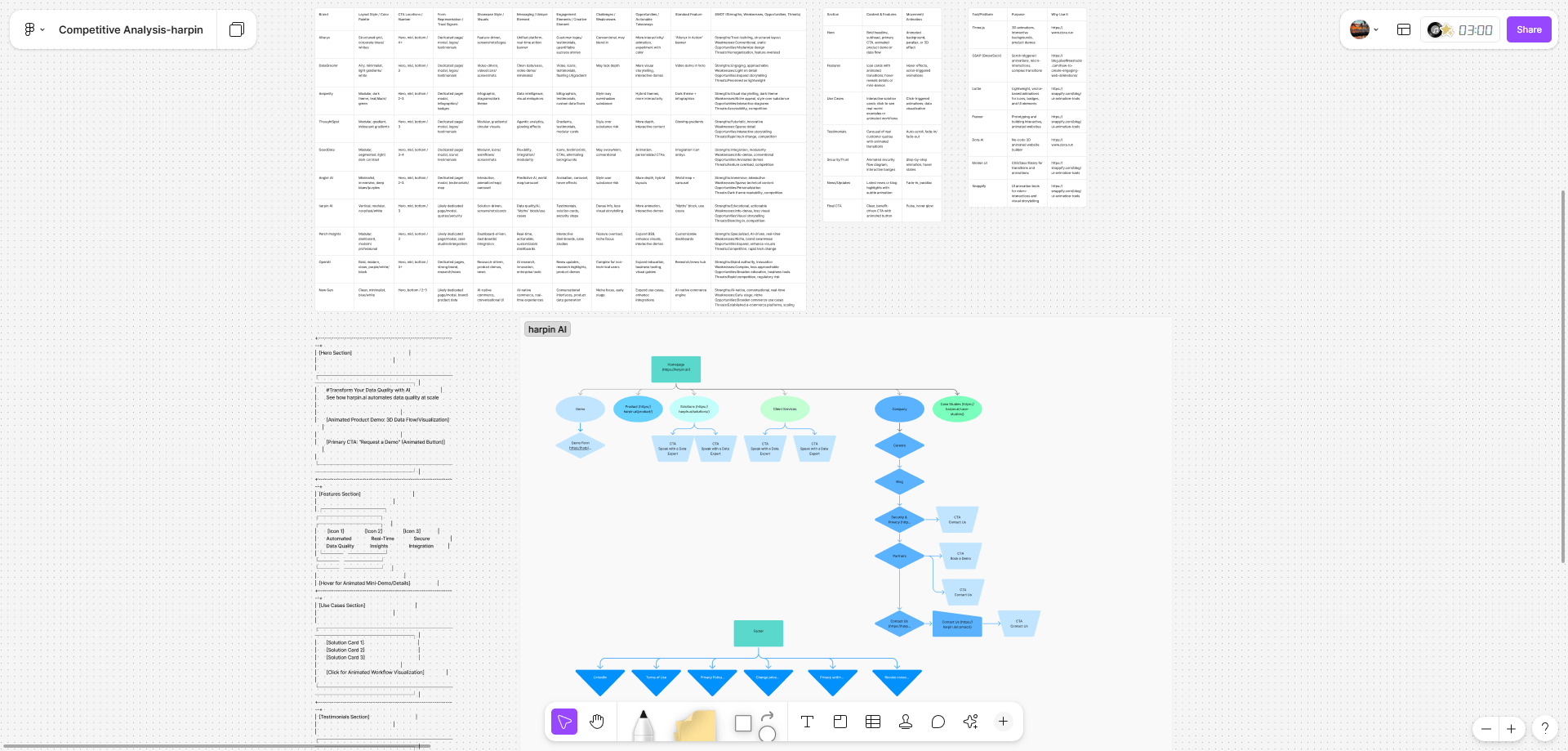
Key Findings:
Differentiators to Elevate: Harpin AI’s strength lies in real-time KPI alerts, decision intelligence, and operational visibility. Unlike competitors that highlight features in isolation, Harpin can position itself as the platform that transforms fragmented workflows into proactive, unified intelligence for contact centers.
Market Opportunity: Competitors follow predictable structures—hero headline, logo wall, 3-value-prop cards, testimonial blocks—but often lack a compelling narrative around *actionable insights at scale*. Harpin can own this story by emphasizing how executives and operators can act in the moment, not after the fact.
Standardization Fatigue: Across the landscape, claims like “AI-powered analytics” and “data quality at scale” are repeated so often they lose meaning. To stand out, Harpin must reframe around outcomes: faster decision cycles, margin growth, and smoother customer experiences.
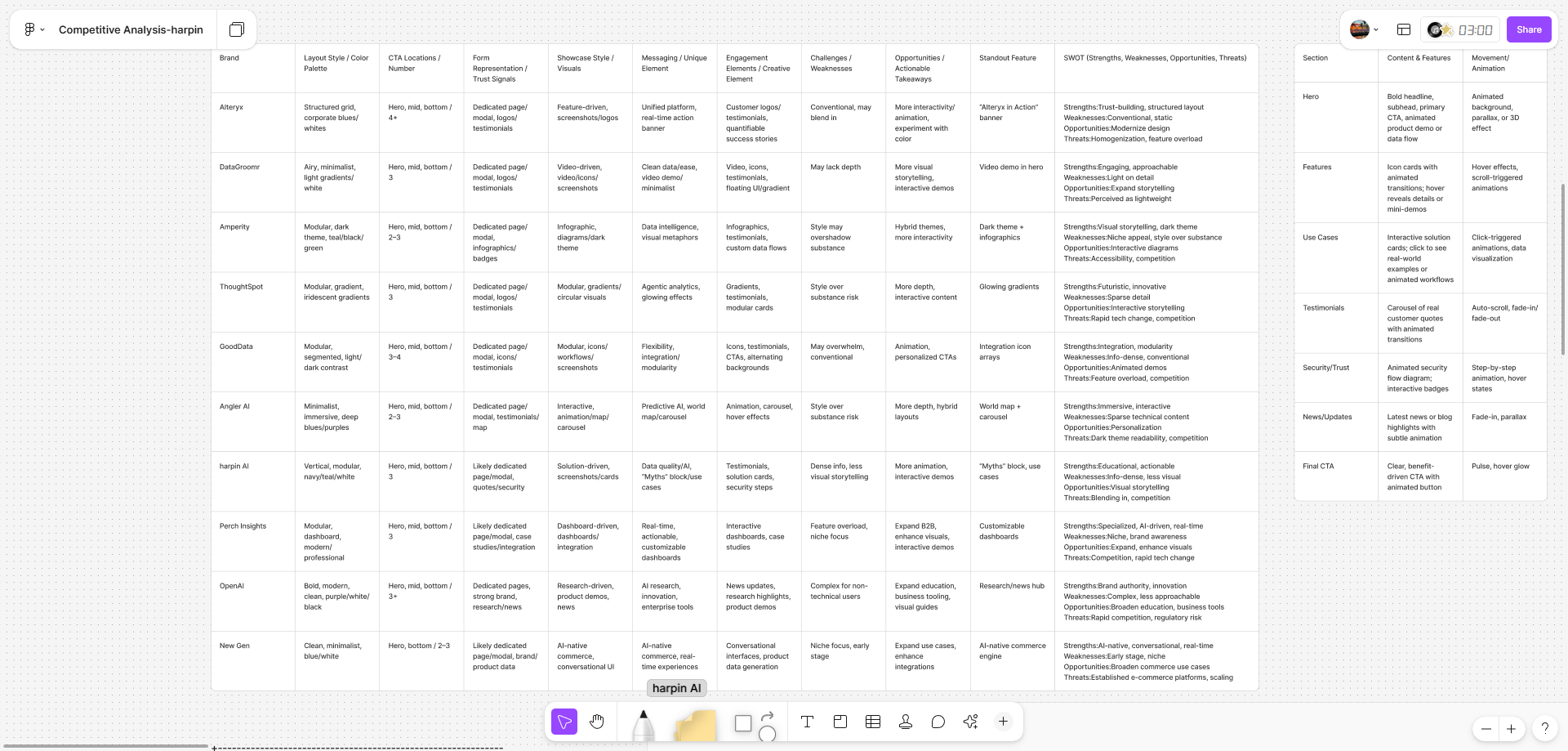
Structural Insights: After conducting the competitive analysis, I captured screenshots of top players and ran them through ChatGPT to uncover the most common page structures driving engagement (hero + CTA, logo wall, feature cards, customer stories). These insights informed Harpin’s new responsive layout, balancing familiar UX patterns with distinctive storytelling and visuals tailored to its enterprise audience.
The 5 W's
1. Who
Enterprise leaders, operations managers, and IT teams in contact centers who need visibility and faster decision-making.
2. What
A real-time call center intelligence platform that delivers KPI alerts, decision intelligence, and margin growth opportunities.
3. Where
Optimized for all devices and breakpoints—executives on the go, analysts in dashboards, and agents at their desktops.
4. When
The moment operational gaps appear—before they escalate into lost revenue, churn, or customer dissatisfaction.
5. Why
To shift organizations from reactive firefighting to proactive improvement, creating smoother experiences for both employees and customers.
After aligning with stakeholders, I used competitive analysis and structural insights to prioritize Harpin’s story: hero messaging around real-time intelligence first, followed by proof points like customer impact, product demos, and trust signals. This sequence ensured clarity and credibility across the new responsive design.
UX Designs
Applying Competitive Research and SEM Best Practices
The UX designs for Harpin AI’s marketing pages were informed by competitive research and optimized using insights from the AI-driven design tool UXPilot.
• Analyzed competitor layouts, messaging flow, and conversion strategies to identify structural and content opportunities.
• Used UXPilot to validate layout decisions and optimize visual hierarchy for clarity, engagement, and conversion intent.
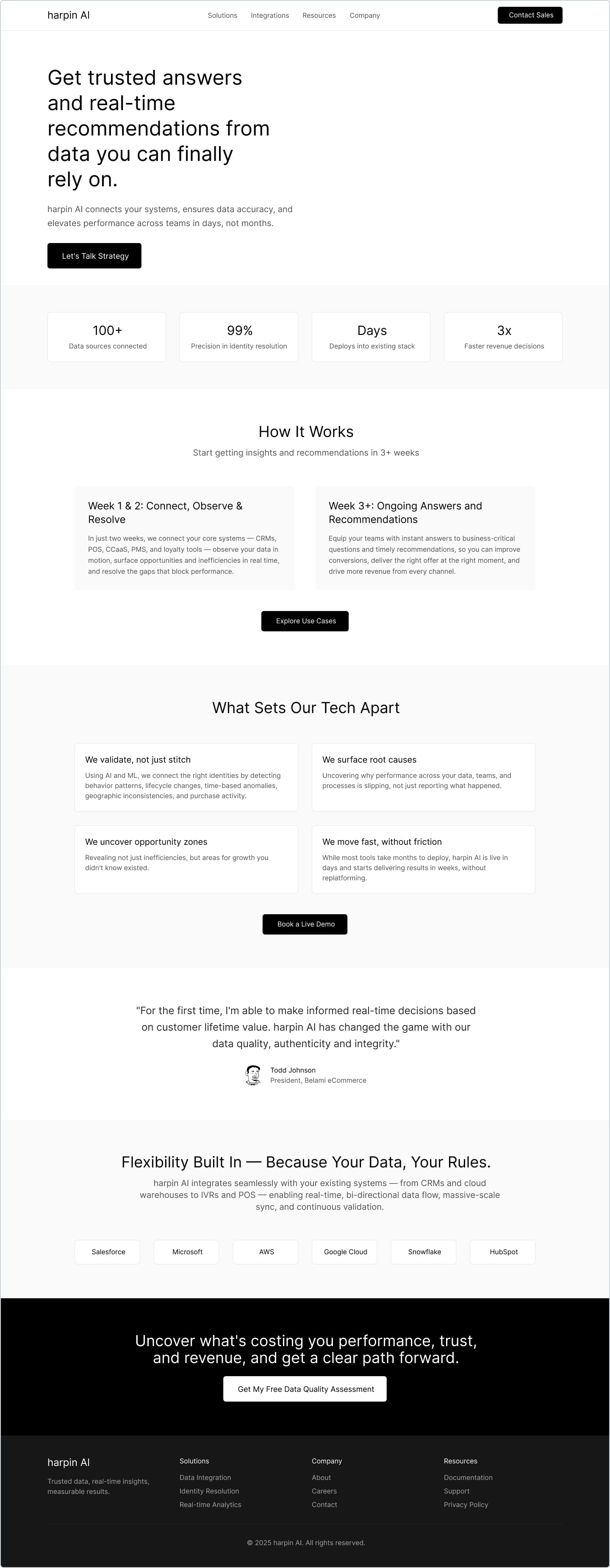
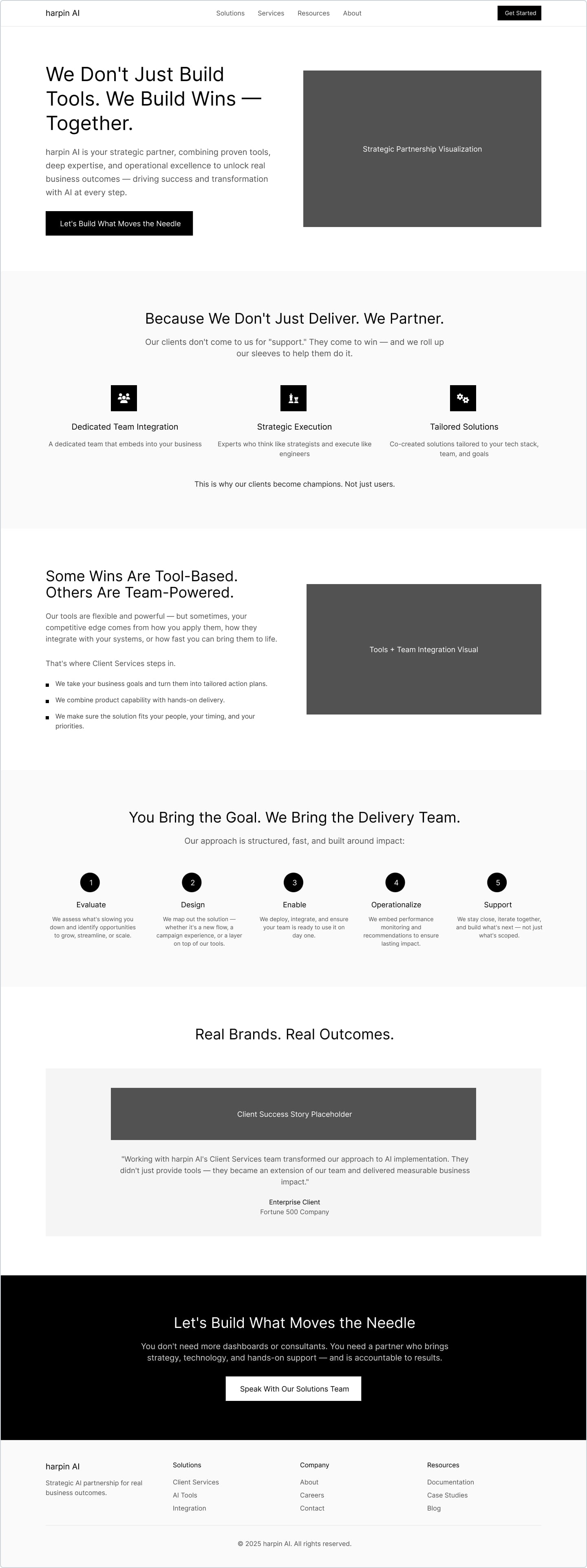
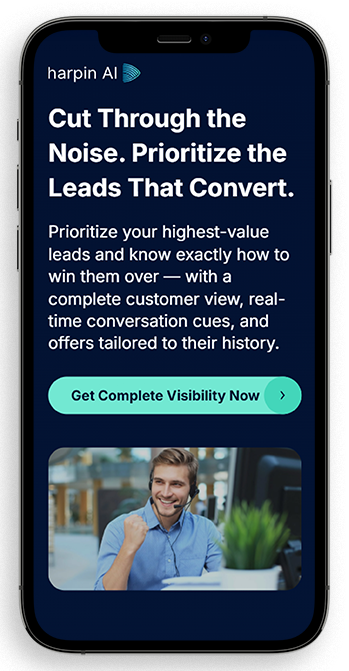
• Created focused hero sections with clear value propositions and single-purpose CTAs (“Get Complete Visibility,” “Book a Strategy Call”) to reduce friction and drive action.
• Structured supporting content into scannable sections—pain points, benefits, and proof points—to guide enterprise users from awareness to decision.
• Included differentiated value blocks for Operations, Finance, and Executive teams, emphasizing real-time KPI alerts and data-driven visibility.
• Prominently featured trust elements such as case studies, logos, and testimonials to build credibility early.
• Delivered 5 fully responsive pages in a 2-week sprint, finalizing imagery and layouts in the first week and completing the full build in the second.
Impact
This competitive research directly shaped Harpin AI’s website redesign: we clarified the platform’s positioning around real-time KPI visibility, operational insights, and decision intelligence. Calls-to-action were restructured to align with executive workflows—encouraging engagement through value-led messaging and guided discovery. By blending proven enterprise design patterns with Harpin’s unique differentiators—like proactive margin insights and cross-department visibility—the new design established clarity, credibility, and authority within the decision intelligence market.
Persona
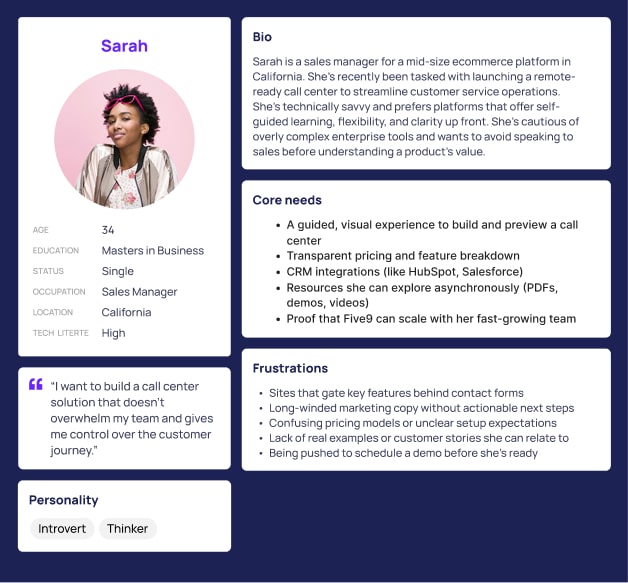
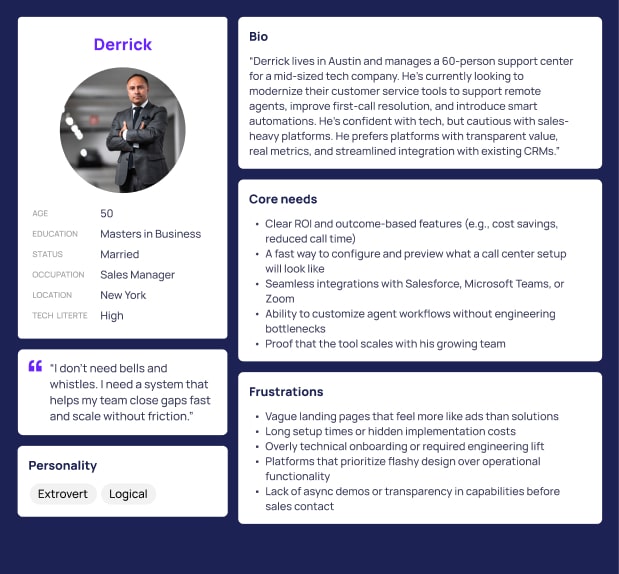
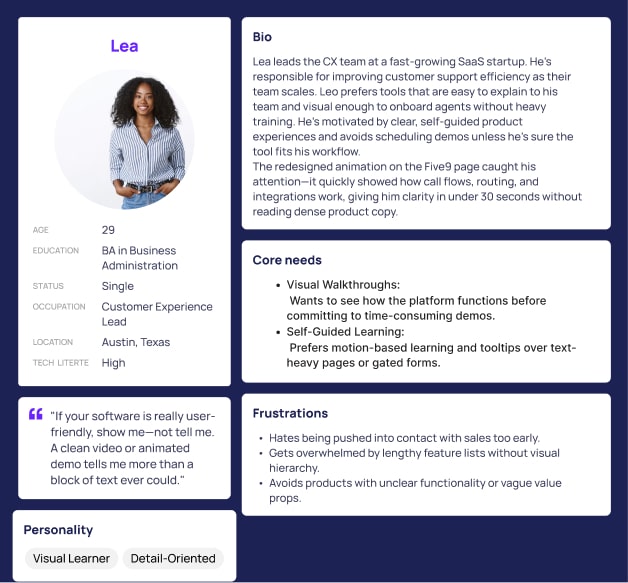
Stakeholders wanted a site that’s easy to navigate, clearly structured, and designed to build trust with enterprise audiences. Visitors are executives, operations leaders, and finance teams looking for real-time visibility into performance metrics, actionable insights, and a clearer understanding of how Harpin AI drives margin growth through decision intelligence.
Solution
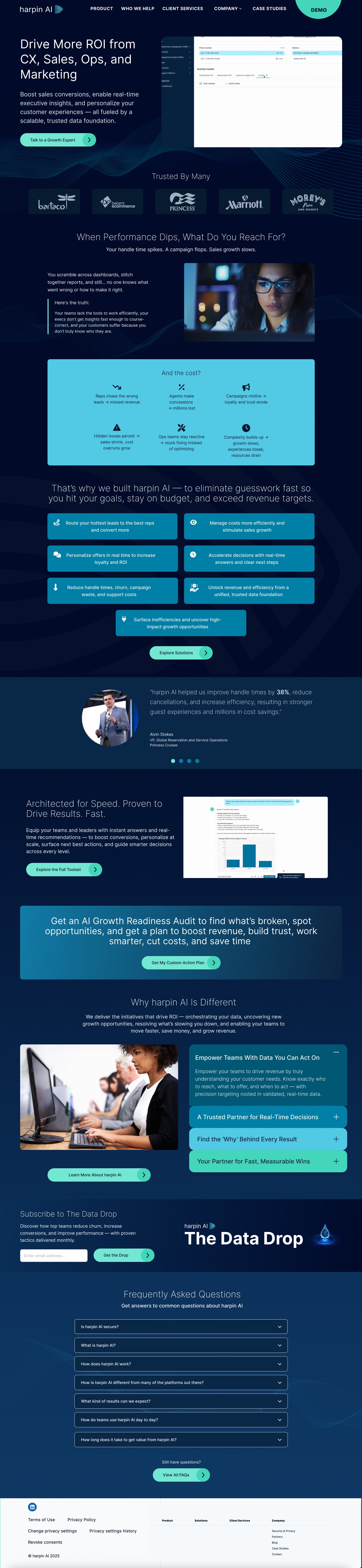
Designed a fully responsive website that communicates Harpin AI’s value with clarity and authority. By using a modern visual system, simplified navigation, and a strategic content hierarchy, the redesign highlights Harpin’s unique strengths—real-time KPI alerts, decision intelligence, and operational visibility. This structure reduces cognitive load for enterprise buyers while building trust and driving demo requests.
Key Takeaways
1. Clarity wins: Above-the-fold must immediately communicate ROI impact—how Harpin AI boosts conversions, cuts costs, and drives growth for CX, Sales, Ops, and Marketing.
2. Trust signals matter: Competitive research confirmed that logo walls, case studies, and testimonials reduce friction and build enterprise credibility.
3. Structure drives action: A clear flow—hero value prop → trusted by many → pain points → solution benefits → proof points—helps buyers understand Harpin’s edge and leads them toward conversion (demo requests, growth audit, or newsletter sign-up).
4. Differentiation is key: Instead of repeating generic “AI-powered analytics,” Harpin stands out by focusing on outcomes—real-time KPI alerts, faster decision cycles, and measurable margin growth.
Harpin AI Website SEM Design
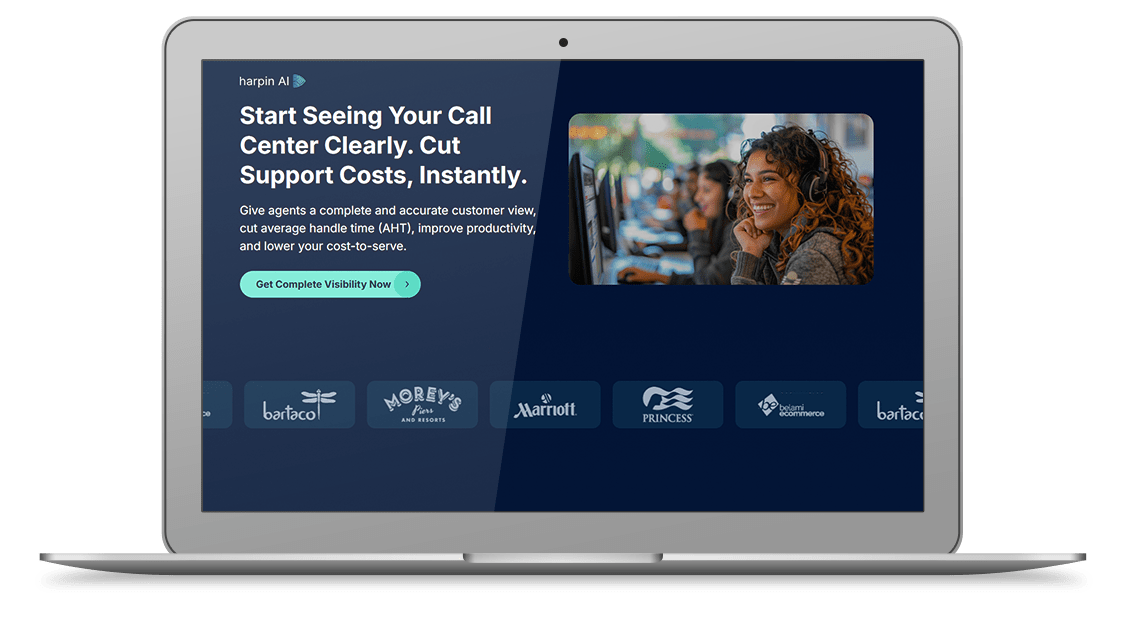
Designed Harpin AI’s Search Engine Marketing (SEM) website experience in just 2 weeks, delivering 5 fully responsive pages across all breakpoints. Images and layouts were finalized within the first week, ensuring a rapid design-to-build workflow. The SEM pages simplified complex product messaging, elevated trust signals, and used a modern, motion-led visual hierarchy to capture attention. Each page was optimized for lead generation—guiding prospects from interest to conversion and supporting Harpin’s growth goals with enterprise clients.
- User: B2B Enterprise
- July, 2025
- Team: Lead Web Designer (me)
- Tools
- Ideation: Wireframes, Rapid Prototypes
- Visual Design: Figma, FigJam
- Development Handoff: HTML, CSS
- Duration
- 2 weeks
Problem
1. How might we:
redesign Harpin AI’s website to clearly communicate its decision intelligence platform and connect with executive, operations, and finance audiences?
2. How might we:
present Harpin AI’s core value—real-time KPI visibility, operational insights, and margin growth—in a simplified, outcome-focused way across all pages?
3. How might we:
optimize layouts and information hierarchy across all devices so users experience clarity, speed, and seamless navigation from homepage to demo request?
4. How might we:
differentiate Harpin AI from competitors in the crowded AI and analytics landscape by emphasizing measurable business impact, credibility, and innovation?
5. How might we:
ensure that trust signals—such as case studies, proof points, and CTAs—are strategically placed to build authority and reduce friction throughout the user journey?
Research
Competitive Research and SEM Best Practices
With limited internal behavioral data, I conducted competitive research across leading B2B SaaS and AI/analytics websites to identify what drives clarity, engagement, and trust in enterprise audiences.
• Benchmarked 10+ competitor websites for messaging structure, visual hierarchy, and credibility elements.
• Studied best practices in navigation, content flow, and interaction design to balance technical depth with approachability.
• Compared layout strategies such as hero headlines, logo trust bars, value differentiators, and proof point placement.
• Identified opportunities for Harpin to stand out—highlighting measurable ROI, real-time KPI visibility, and decision intelligence instead of generic “AI-powered analytics” claims.
• Synthesized findings into actionable design principles that guided the entire website redesign, completed within a 2-week sprint.
UX Designs
Applying Competitive Research and SEM Best Practices
With limited internal behavioral data, I conducted competitive research across leading B2B SaaS and AI/analytics websites to identify what drives clarity, engagement, and trust in enterprise audiences.
• Benchmarked 10+ competitor websites for messaging structure, visual hierarchy, and credibility elements.
• Studied best practices in navigation, content flow, and interaction design to balance technical depth with approachability.
• Compared layout strategies such as hero headlines, logo trust bars, value differentiators, and proof point placement.
• Identified opportunities for Harpin to stand out—highlighting measurable ROI, real-time KPI visibility, and decision intelligence instead of generic “AI-powered analytics” claims.
• Synthesized findings into actionable design principles that guided the entire website redesign, completed within a 2-week sprint.
Helped Harpin AI Stand Out in a Crowded Market
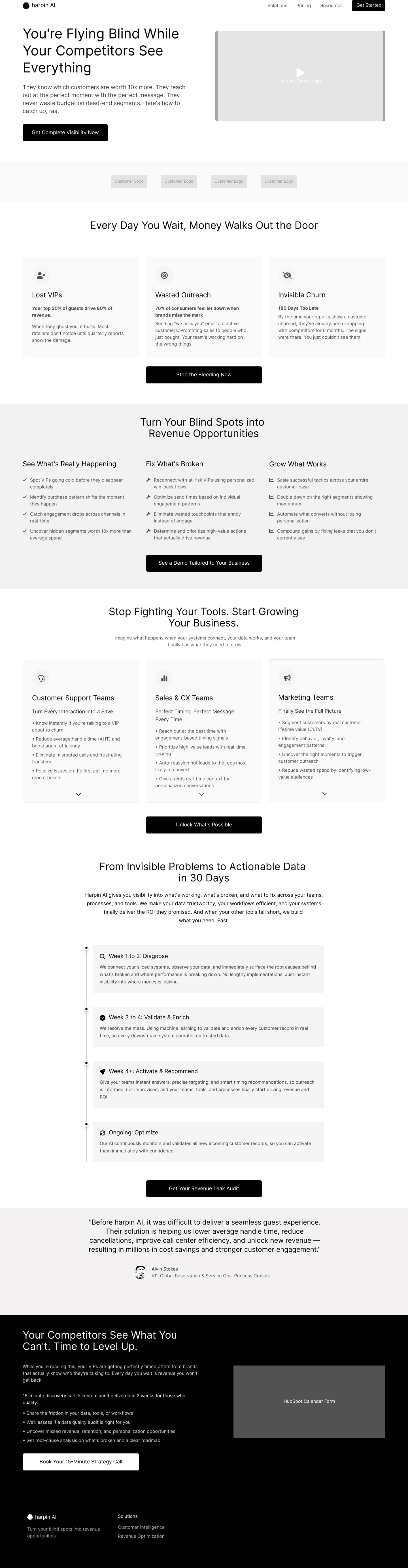
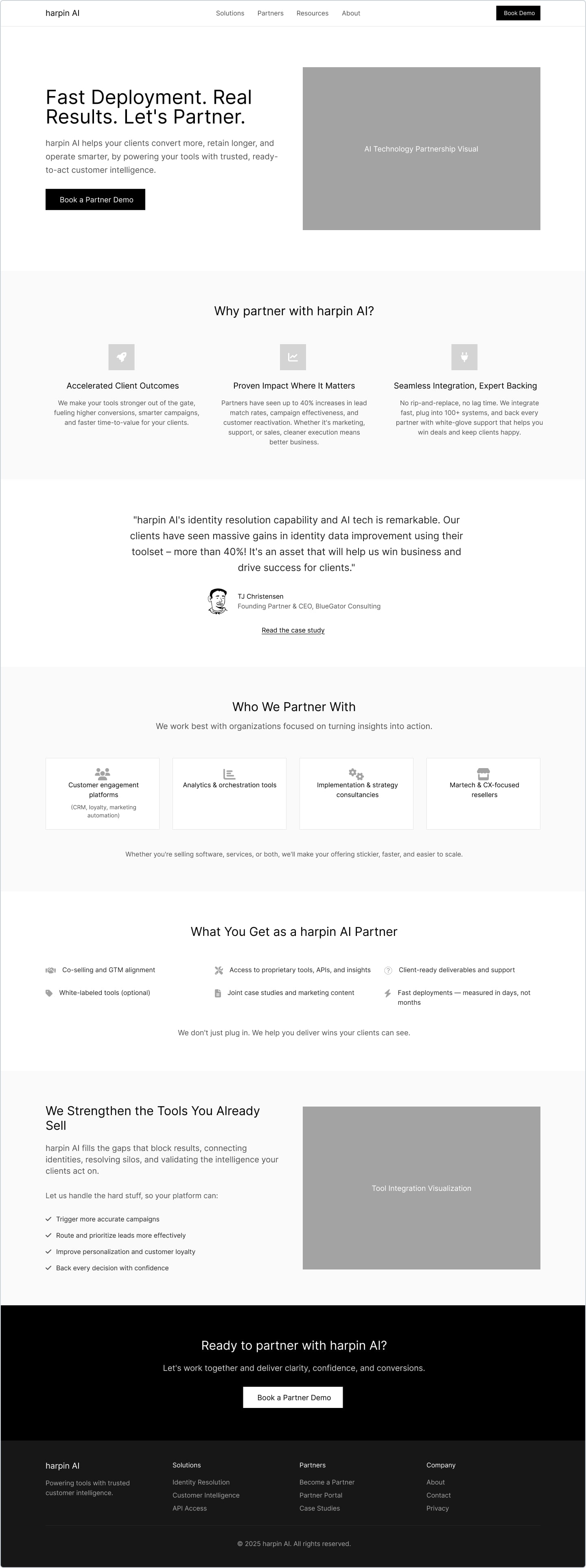
During the research phase, I analyzed leading B2B SaaS and AI/analytics websites to understand how top enterprise brands communicate complex technology simply and credibly. I captured and reviewed competitor experiences, then used ChatGPT to identify common structures, messaging flows, and design patterns that improved clarity and engagement. This revealed best practices in value-focused hero messaging, clear navigation, strategic trust signal placement, and streamlined content hierarchy—while also highlighting areas where Harpin could stand out. By applying these insights, I designed a cohesive, responsive website that clearly articulated Harpin AI’s strengths in real-time KPI visibility, decision intelligence, and measurable business impact, positioning the brand as both modern and trustworthy in the enterprise AI space.
Key Findings:
Differentiators to Elevate: For the entire website pages, Harpin AI’s edge is in proving real-time ROI—through KPI alerts, decision intelligence, and operational visibility. Competitors typically emphasize isolated features, but Harpin can position its SEM pages as outcome-driven funnels that turn paid traffic into measurable business impact.
Market Opportunity: SEM competitors often recycle predictable layouts—hero headline, short value prop, logo wall, testimonial snippet—but fail to tell a conversion-focused story. Harpin’s SEM pages were designed to bridge that gap by connecting pain points directly to solutions, with clear CTAs that guide visitors from ad click to demo request.
Standardization Fatigue: Generic SEM claims like “AI-powered insights” or “optimize at scale” saturate the market. Harpin’s SEM content needed to cut through the noise by reframing around outcomes: reducing wasted spend, accelerating conversions, and improving decision speed for enterprise buyers.
Structural Insights: Through competitive analysis, I captured and evaluated leading SEM pages, then ran layouts through ChatGPT to identify recurring structural elements—hero + CTA, trust signals, 3-card differentiators, and testimonial blocks. These insights shaped Harpin’s 5 SEM pages, ensuring they balanced proven best practices with unique positioning to maximize conversion rates.
The 5 W's
1. Who
Enterprise executives, operations leaders, and finance teams who need unified visibility into performance metrics and margin drivers.
2. What
A decision intelligence platform that delivers real-time KPI alerts, data-driven insights, and operational visibility across departments.
3. Where
Optimized for all devices—executives tracking metrics on the go, operations teams monitoring dashboards, and analysts reviewing performance trends.
4. When
The moment key performance shifts occur—before they impact efficiency, profitability, or strategic alignment.
5. Why
To help organizations move from reactive reporting to proactive decision-making, driving continuous improvement and measurable business impact.
After aligning with stakeholders, I used competitive research and structural insights to prioritize Harpin’s story: hero messaging around decision intelligence and real-time visibility first, followed by proof points such as measurable ROI, platform capabilities, and client credibility. This sequence built a narrative of clarity, trust, and innovation across the new responsive design.
Impact
This competitive research directly shaped Harpin AI’s website redesign: we clarified the positioning around real-time visibility, decision intelligence, and measurable business impact. Calls-to-action were restructured to guide executives and operations leaders toward deeper engagement, while the visual hierarchy was simplified for clarity across all devices. By combining proven enterprise design patterns with Harpin’s unique differentiators—like real-time KPI alerts, margin insights, and cross-department visibility—the new design stood out in the crowded AI and analytics landscape while aligning with enterprise buyer expectations.
Persona
Stakeholders wanted a site that’s easy to navigate, clearly structured, and designed to build immediate trust with enterprise audiences. Visitors are executives, operations leaders, and finance teams looking for real-time visibility into key performance metrics, data-driven insights, and a clear understanding of how Harpin AI helps them make faster, smarter business decisions.
Solution
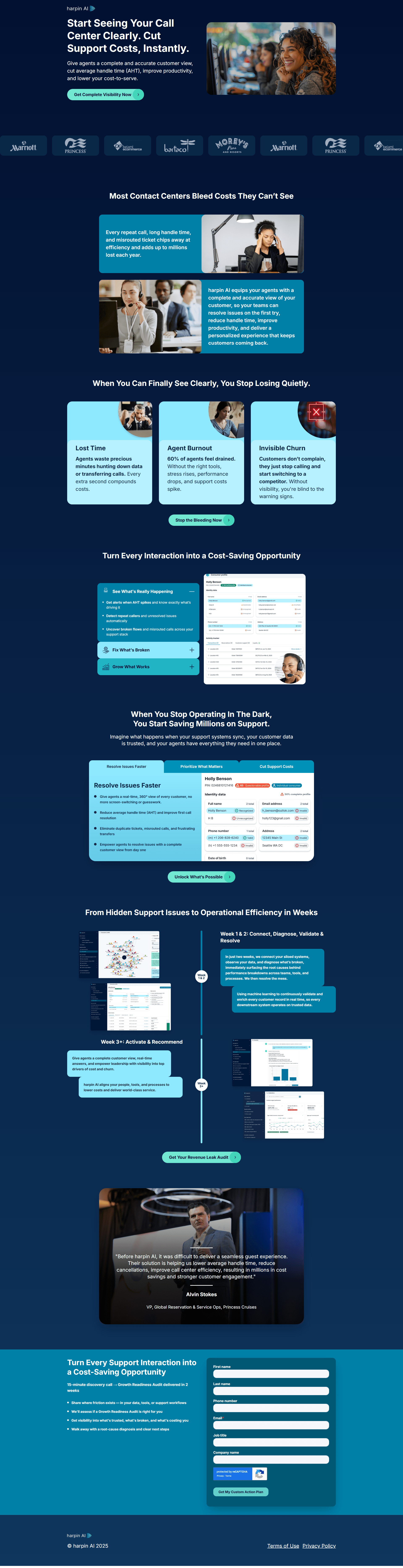
Designed a fully responsive website that communicates Harpin AI’s value with clarity and authority. By using a modern visual system, simplified navigation, and a strategic content hierarchy, the redesign highlights Harpin’s unique strengths—real-time KPI alerts, decision intelligence, and operational visibility. This structure reduces cognitive load for enterprise buyers while building trust and driving demo requests.
Key Takeaways
1. Clarity wins: Above-the-fold must immediately communicate ROI impact—how Harpin AI boosts conversions, cuts costs, and drives growth for CX, Sales, Ops, and Marketing.
2. Trust signals matter: Competitive research confirmed that logo walls, case studies, and testimonials reduce friction and build enterprise credibility.
3. Structure drives action: A clear flow—hero value prop → trusted by many → pain points → solution benefits → proof points—helps buyers understand Harpin’s edge and leads them toward conversion (demo requests, growth audit, or newsletter sign-up).
4. Differentiation is key: Instead of repeating generic “AI-powered analytics,” Harpin stands out by focusing on outcomes—real-time KPI alerts, faster decision cycles, and measurable margin growth.
LinkedIn Social Graphics
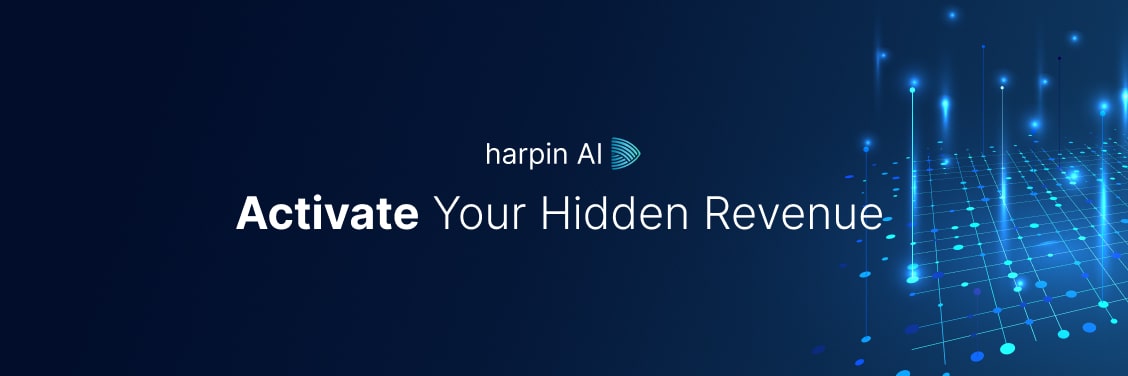
Current LinkedIn social graphics were not converting well, often blending into a crowded B2B feed. I redesigned the assets to make Harpin AI’s message stand out—focusing on bold, simplified visuals and outcome-driven copy that communicates ROI, decision intelligence, and real-time operational visibility at a glance. The updated graphics are tailored for LinkedIn’s format, designed to capture attention quickly, improve engagement, and drive more demo requests from enterprise audiences.
- User: B2C
- July, 2025
- Team: Garphic Designer (me)
- Tools
- Visual Design: Figma, Illustrator
- Duration
- 2 weeks
Hypothesis
If we redesign Harpin AI’s LinkedIn graphics to lead with a bold, outcome-focused headline and a single clear CTA, then simplify supporting content into scannable, visually engaging formats, we’ll increase click-through rates and demo requests within the first 60 days of launch.
Research
Competitive scans showed top players lean on animation, dynamic content, and focused CTAs. By introducing a clear CTA, animated highlights, and a simplified flow, we aimed to boost conversions significantly.



Persona
We used lightweight motion to illustrate how Harpin AI connects real-time data and insights across teams—without overwhelming users. Subtle animations demonstrated how KPI alerts, performance dashboards, and margin insights work together seamlessly, making complex analytics feel clear, intuitive, and actionable.
Enterprise Presentation Deck
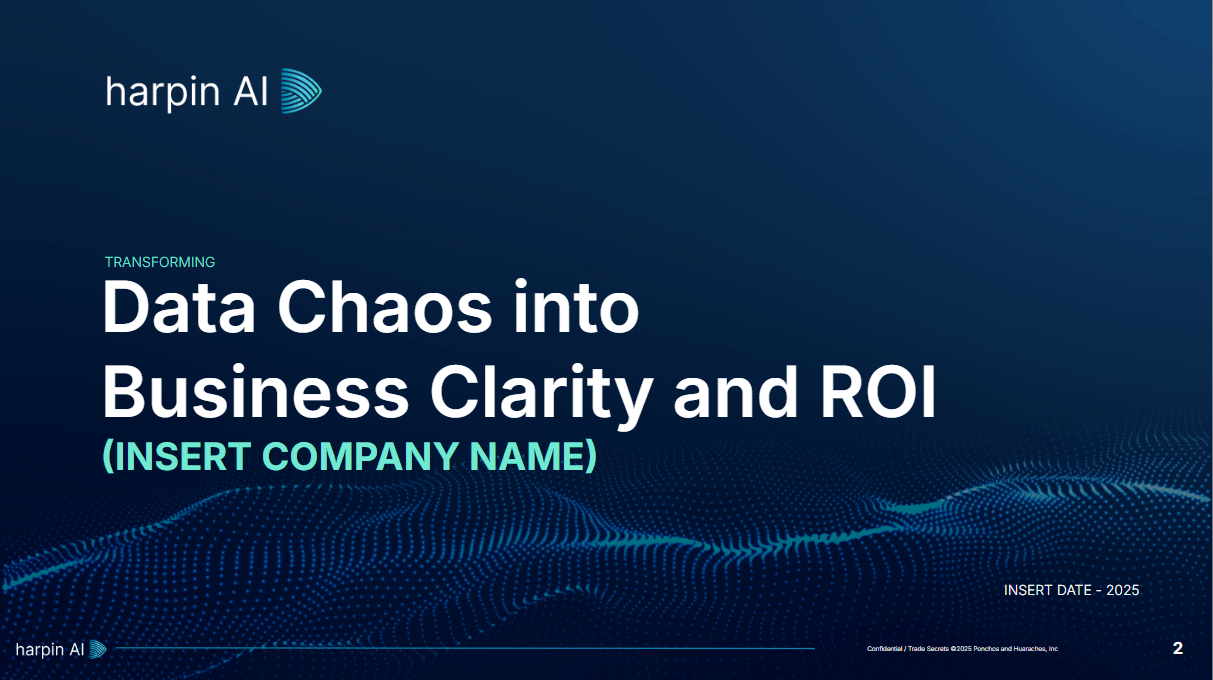
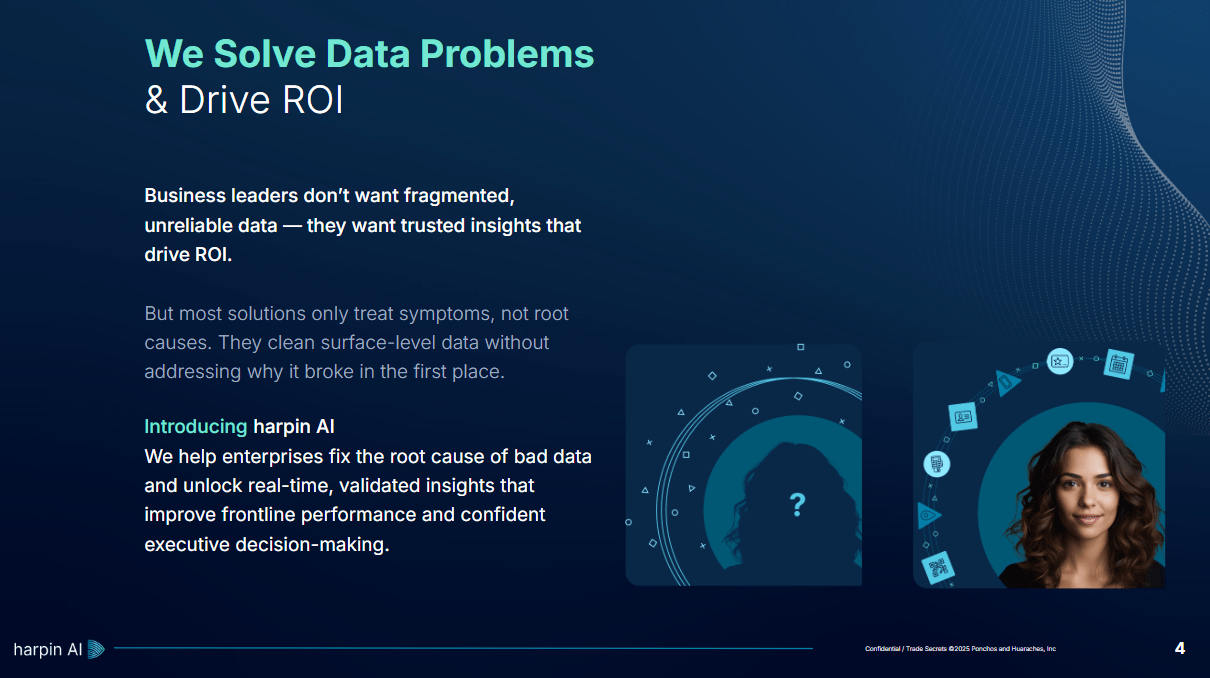
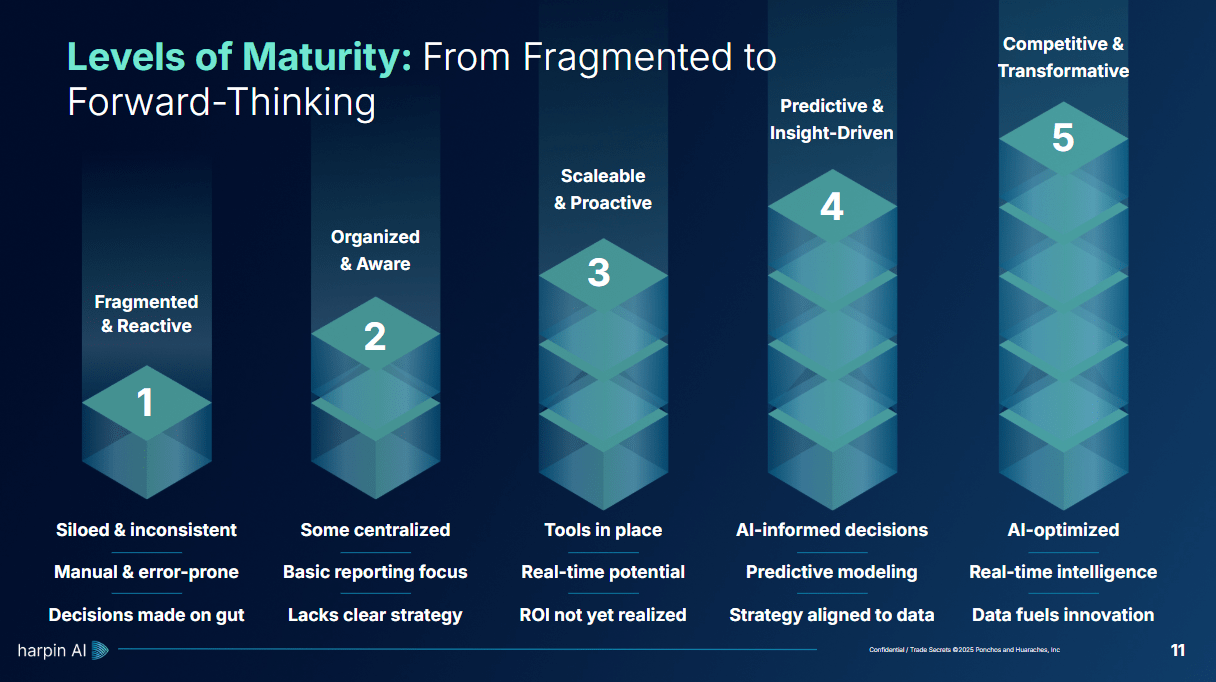
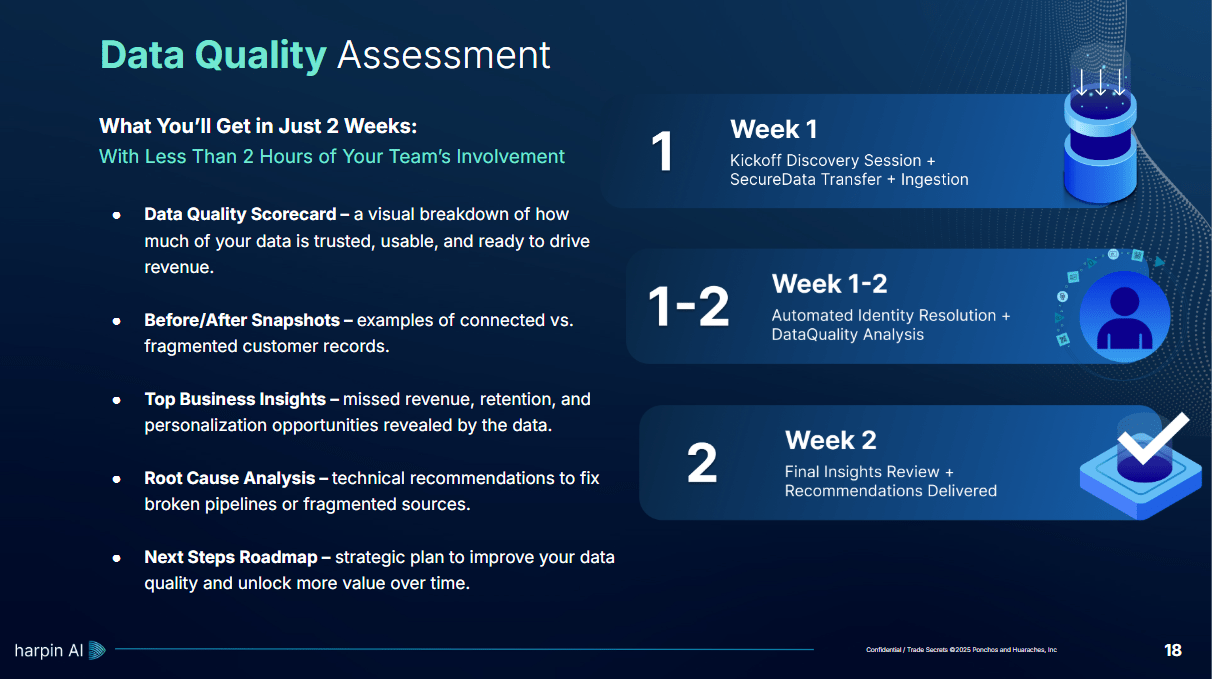
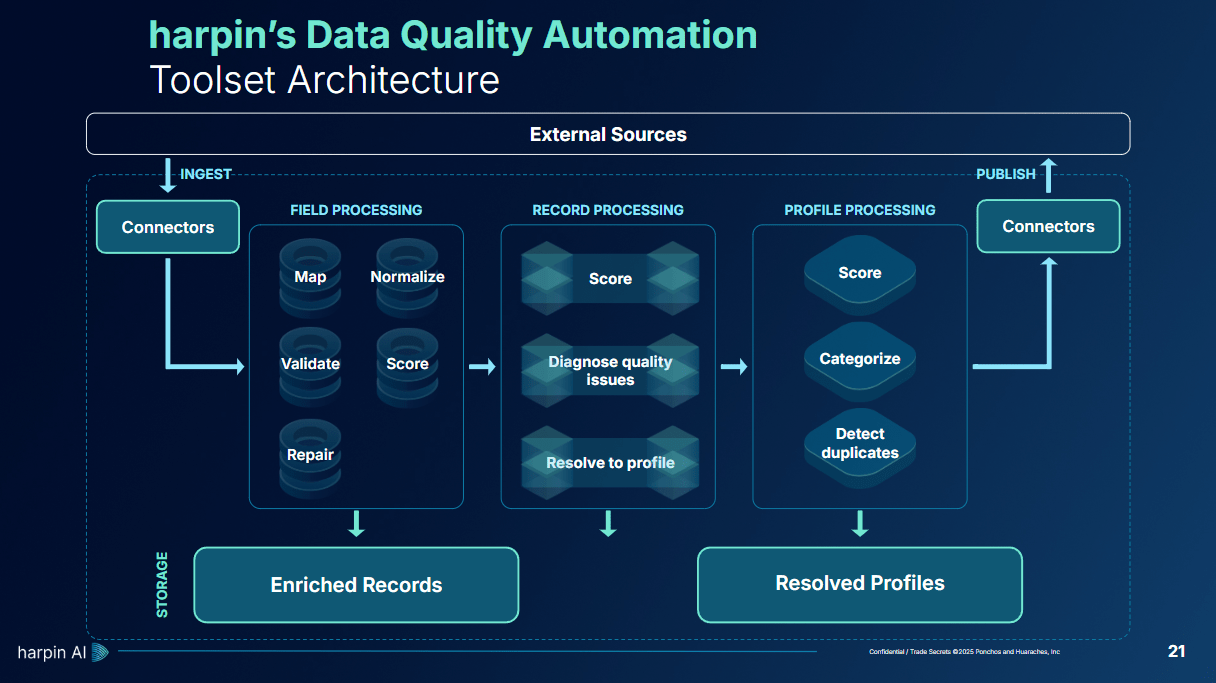
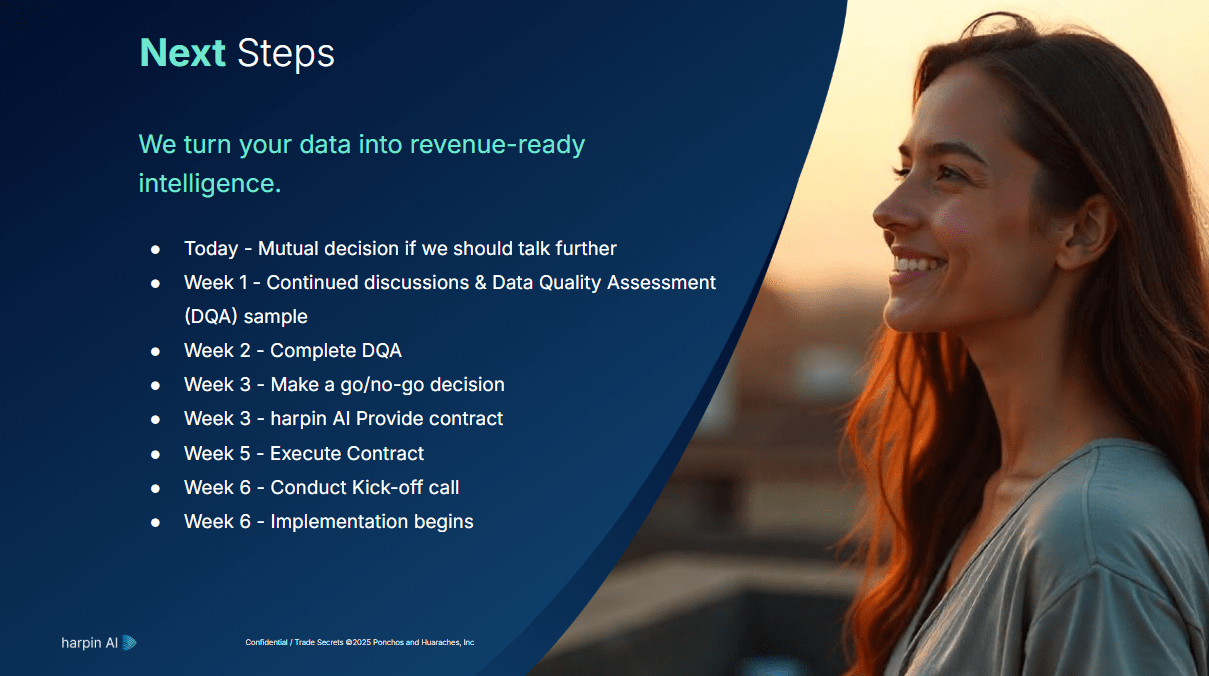
I was responsible for completely redesigning Harpin AI’s presentation deck to better communicate the brand’s value to enterprise prospects. The goal was to ensure clarity, consistency, and conversion when presenting to high-value accounts—most notably Princess Cruises. The new deck replaced dense, text-heavy slides with a streamlined visual system: bold headlines, outcome-driven messaging, and clean layouts that showcased Harpin’s differentiators like real-time KPI alerts, decision intelligence, and measurable ROI. This redesign helped position Harpin as a trusted partner and strengthened its ability to convert critical enterprise opportunities.
- User: B2B
- May, 2025
- Team: Garphic Designer (me)
- Tools
- Visual Design: Figma, Illustrator, Google Slides
- Duration
- 2 weeks
Hypothesis
If we completely redesign Harpin AI’s enterprise slide deck with bold, outcome-focused headlines, streamlined visuals, and clear storytelling, then prospects like Princess Cruises will better understand the value proposition, increasing engagement during presentations and improving conversion opportunities within the first 60 days of use.
Web Open Graph Images
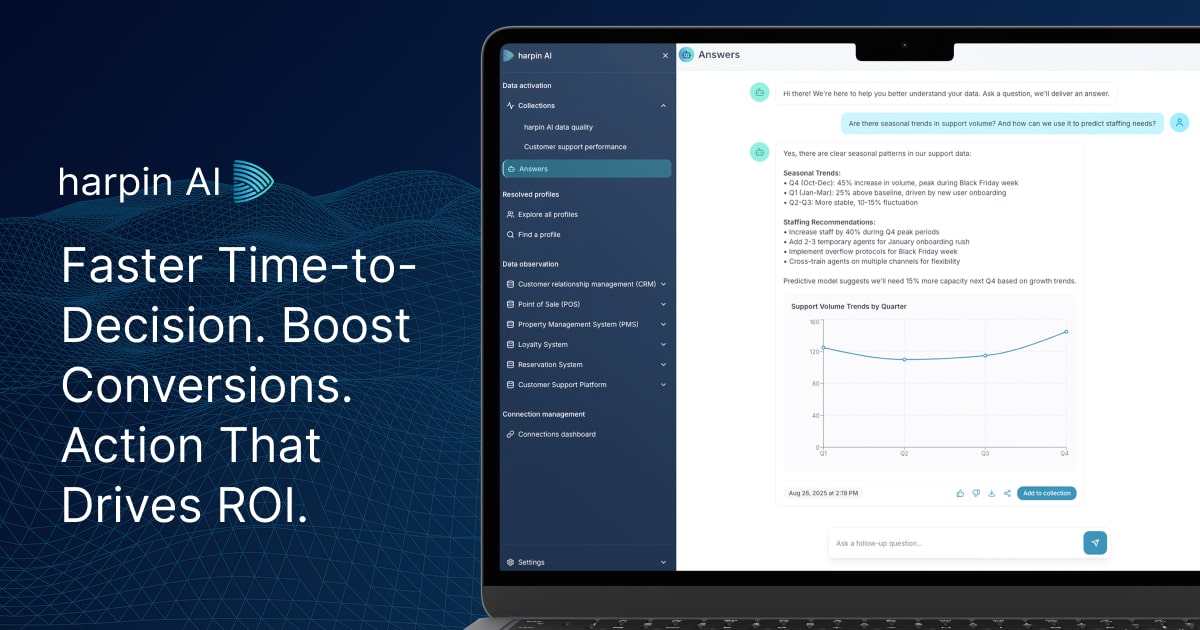
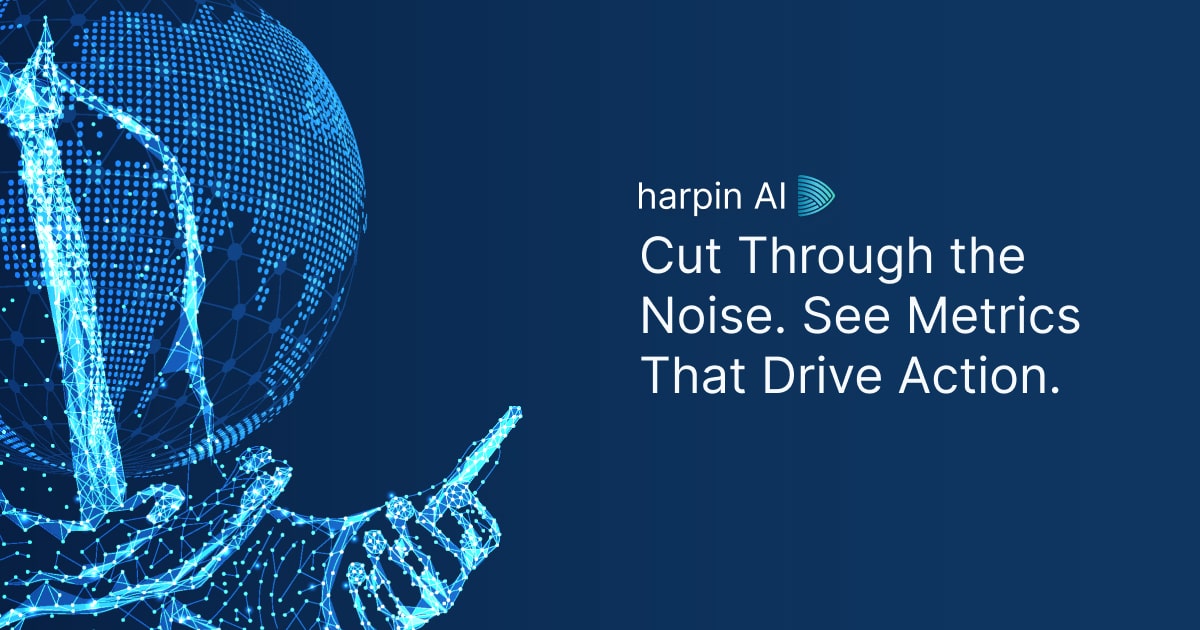
I designed 20 custom open graph images to support all of Harpin AI’s new web pages. Each image was tailored to align with the page content while maintaining consistency across the brand’s visual system. The goal was to ensure that every link shared on social media or in messaging apps had a professional, engaging preview that reinforced Harpin’s value proposition. This work strengthened brand presence, improved click-through rates, and created a cohesive look across all 15+ redesigned pages.
- User: B2C,B2B
- September, 2025
- Graphic Designer (me)
- Tools
- Visual Design: Figma, Adobe Creative Suite
- Duration
- 5 business days